Stage 2 tuning in Tbilisi

Stage 2 ECU software tailored to mechanical modifications
Stage 2 Tuning adapts the software to modified mechanical components to increase power and torque. We determine which components need replacing, check the vehicle’s technical condition, and prepare ECU software tailored to these modifications.
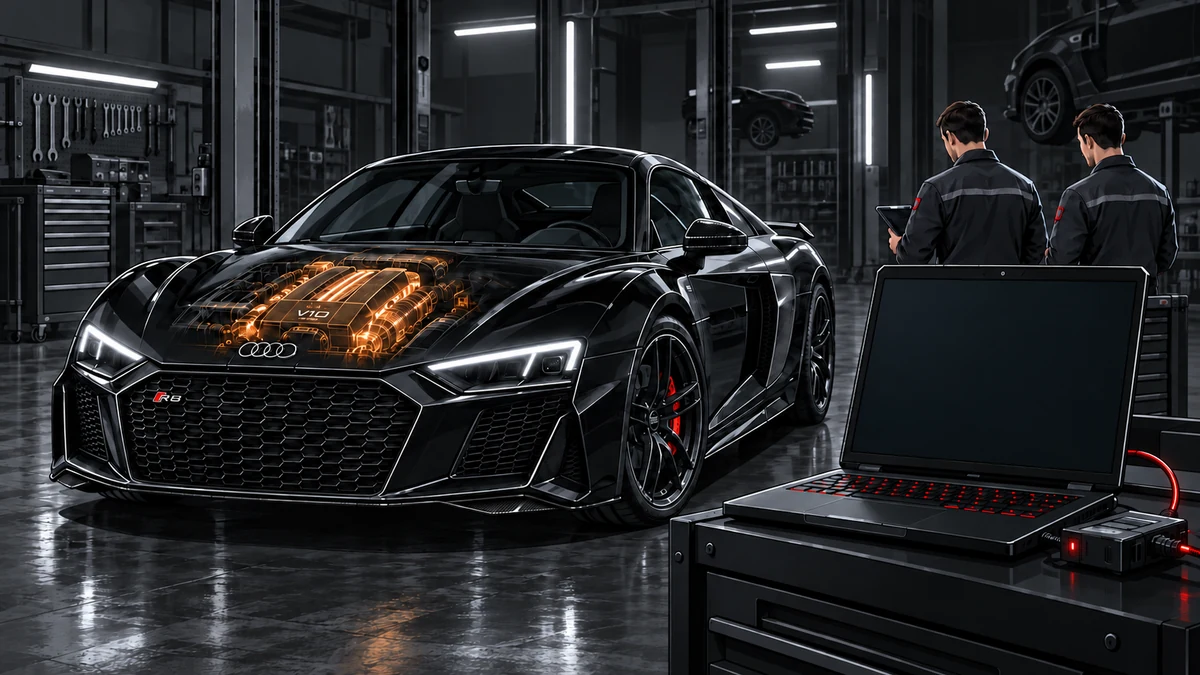
Figures with the factory program.
- Warranty on the work performed
- Original software stored by VIN
- Free restoration using the saved original


Simply explained
What is Stage 2 and how does it work?
Stage 2 combines mechanical modifications with ECU software tailored to them. Its goal is to increase power and torque while taking the capabilities of the modified components into account.
Upgrades to the intake system and intercooler improve air supply and cooling. Exhaust modifications reduce resistance to exhaust gas flow. In the ECU software, we adapt fuel injection to the installed components, boost pressure control on turbocharged engines, and ignition timing on petrol engines.
At our workshop, Stage 2 on diesel vehicles requires disabling DPF, EGR and AdBlue/SCR, if these systems are fitted.
Software changes

- Fuel injection parameters — matched to the modified configuration
- Boost pressure control — on turbocharged engines, taking the installed components into account
- Ignition timing — petrol engines
- Torque control and throttle response
- Other engine control parameters — depending on the vehicle and software
We prepare the calibration for the installed components, engine, ECU version and fuel. We check engine operation and live data under load, and adjust the calibration if needed.
Components and compatibility
What is needed for Stage 2?
Air supply and cooling
Adequate air supply and cooling under increased load. The air filter, intake pipes and intercooler are replaced if needed.
Exhaust system
Stage 2 requires replacing the relevant exhaust components so that exhaust gases can flow more freely.
Fuel supply
A fuel system in good condition that can deliver the required amount of fuel under increased load. Additional modifications depend on the engine and desired result.


Required mechanical modifications are completed before writing the software. We first check engine fault codes and live data, fuel delivery, intake system sealing, the turbocharger and cooling system. Any faults found must be resolved first.
Steps
Four steps of the work
- Diagnostics and readingWe check the installed components, ECU fault codes and live data. We read the software using OBD, Bench or Boot.
- Individual calibrationWe prepare the Stage 2 file for the installed components, engine, ECU version and fuel.
- Writing the softwareWe write the modified file to the ECU and verify that writing has completed.
- TestingWe check engine operation, live data and fault codes under load. We adjust the calibration if needed.
Questions and answers
Frequently asked questions
Which vehicles can receive Stage 2?
We perform Stage 2 on passenger cars and trucks, regardless of make. We check feasibility for each vehicle based on its engine, ECU software support, installed components and technical condition.
How does Stage 2 differ from Stage 1?
Stage 1 is a software calibration for factory components in good condition. Stage 2 involves appropriate mechanical modifications and software tailored to them. Stage 1 does not have to be written before moving to Stage 2 — the vehicle needs the components required by the chosen software.
Which components need replacing?
At our workshop, Stage 2 requires replacing the relevant exhaust components so that exhaust gases can flow more freely. Additional intake, intercooler and fuel system modifications depend on the engine and goal. The factory turbocharger may remain.
How much will power and torque increase?
Gains depend on the engine, installed components, fuel and technical condition. The calculator shows estimates. We assess your vehicle’s potential after diagnostics. Actual power and torque must be measured.
Plan Stage 2 for your vehicle
Send us the model, year, engine, transmission and installed or planned components. Tell us your desired result — we will explain the modifications and checks needed. Consultation is free.